What does industrial insect control target?
In a production environment, an insect infestation is not a matter of comfort but of compliance risk. In a food-industry audit, a gap in the pest control programme is grounds on its own for a point deduction, and in more serious cases for suspension of certification. The goal is therefore twofold: eliminating the existing infestation and running a documented system that demonstrably prevents its return.
How is a treatment programme structured?
1. On-site survey
We walk the facility, identify the critical points — openings, loading doors, drain connections, waste storage, raw-material intake — and assess the extent of the infestation and the likely routes of entry. The survey produces a site plan marking the monitoring and treatment points.
2. Treatment plan
The plan sets out the products to be used, the frequency of interventions and the treatment method. In food-processing environments we use only products authorised for that specific use, and match the method to the nature of the product being manufactured.
3. Intervention
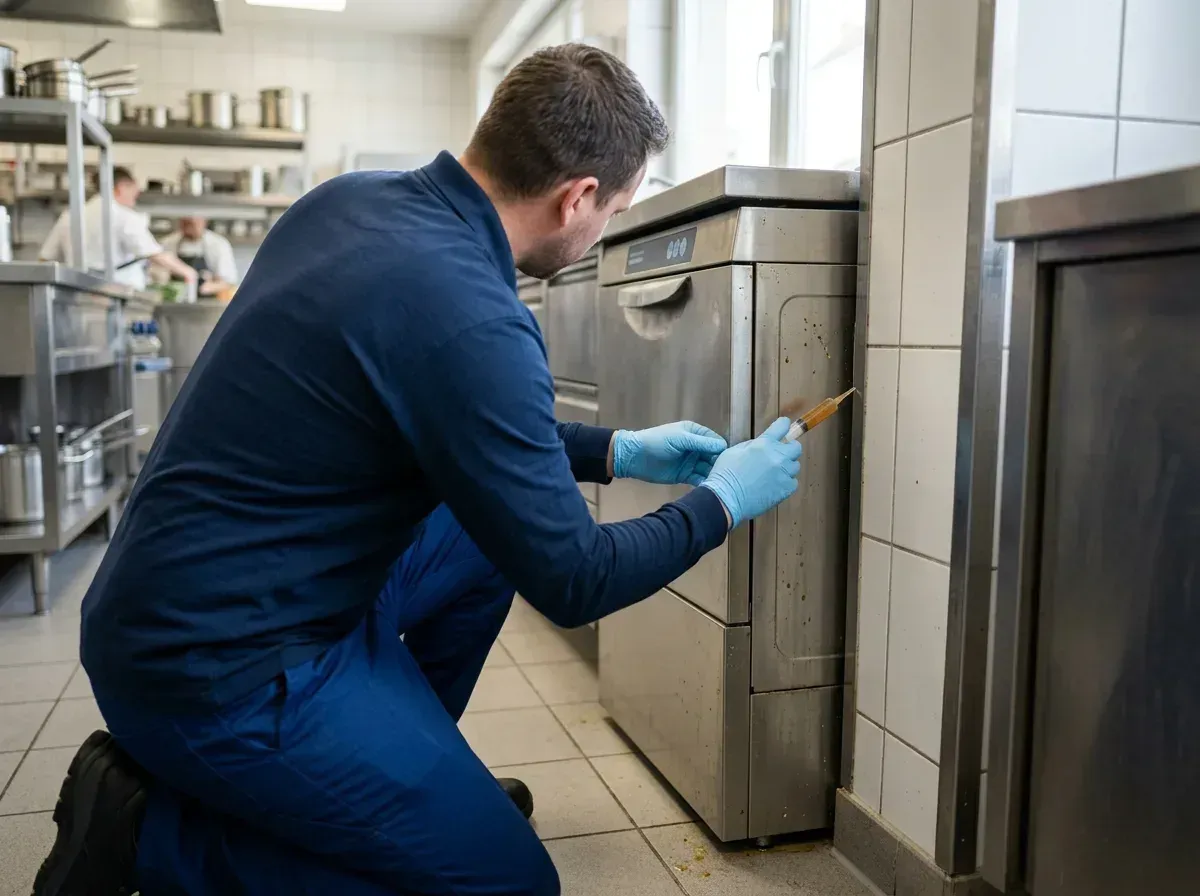
Treatments are scheduled around the production calendar, carried out during shift breaks or at weekends. The methods used include residual spraying, gel baiting, heat treatment and ULV fogging — the choice depends on the pest, the environment and food-safety constraints.
4. Monitoring and follow-up
Regular inspection of the deployed monitoring devices shows whether the programme is working. Catch-data trends are objective evidence at audit, and give early warning if pressure is rising again in an area.
Audit-ready documentation
We hand over full documentation for every treatment: a treatment report, safety data sheets, copies of authorisations, a site plan with the monitoring points, and a summary of catch data. This is the file that has to be produced at an IFS or BRCGS audit — and its absence is the most common non-conformity in the pest control section.
What exactly does an audit expect from pest control documentation? We cover that in our guide to HACCP pest control requirements.
Who is it for?
Food-processing plants, logistics centres and warehouses, hospitality venues and hotels, healthcare and social care institutions, municipalities, and industrial manufacturing plants. For a house and garden we contract directly with private individuals; for a flat in an apartment building, we work through the building manager.