What a visible ant doesn’t tell you
The ants moving across a walking surface make up a small share of the colony. Most of the workers, and the queen responsible for reproduction, stay in the nest – typically under paving, inside a wall structure or in insulation. This is why surface treatment appears to produce an immediate result, only for the original situation to return within a few weeks.
An effective method either reaches the nest, or uses a bait that the workers carry back – which, through food-sharing inside the colony, also reaches the interior of the nest.
Three cases that need separate treatment
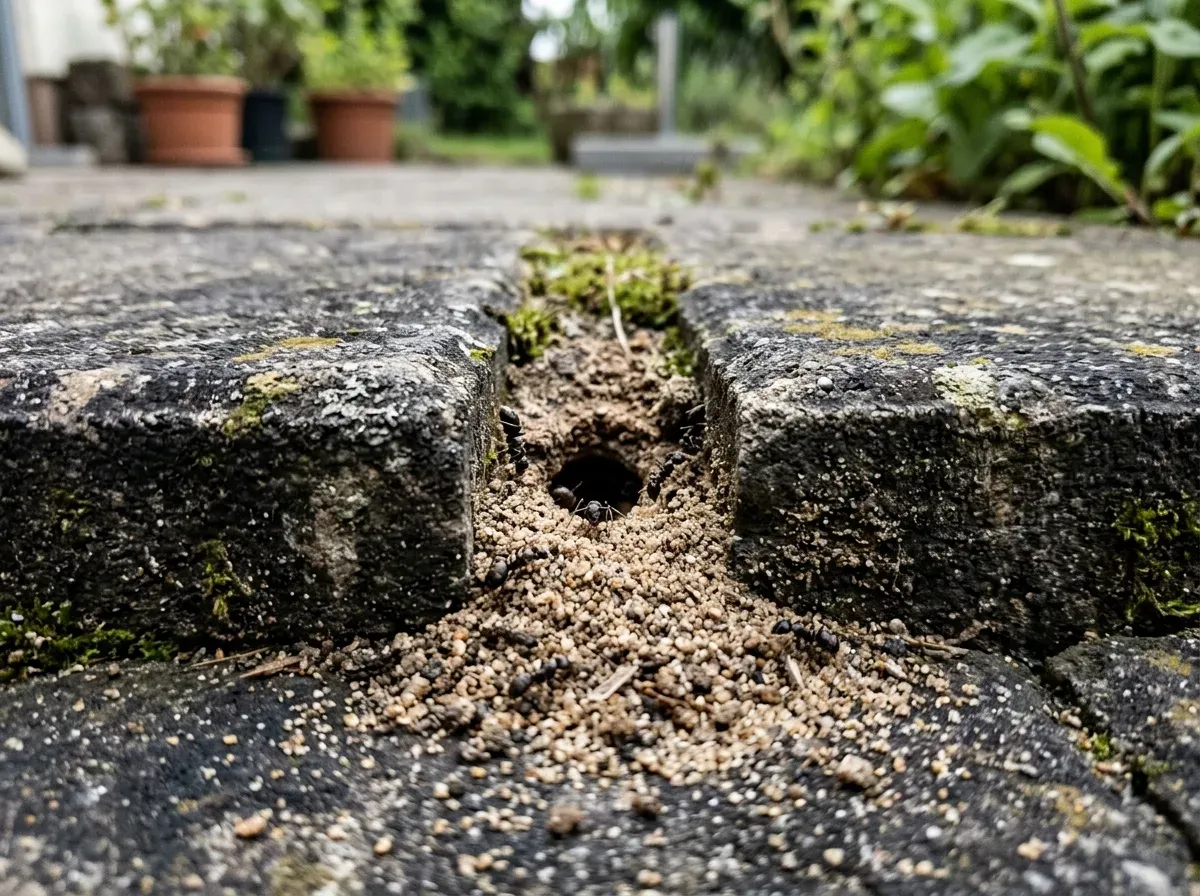
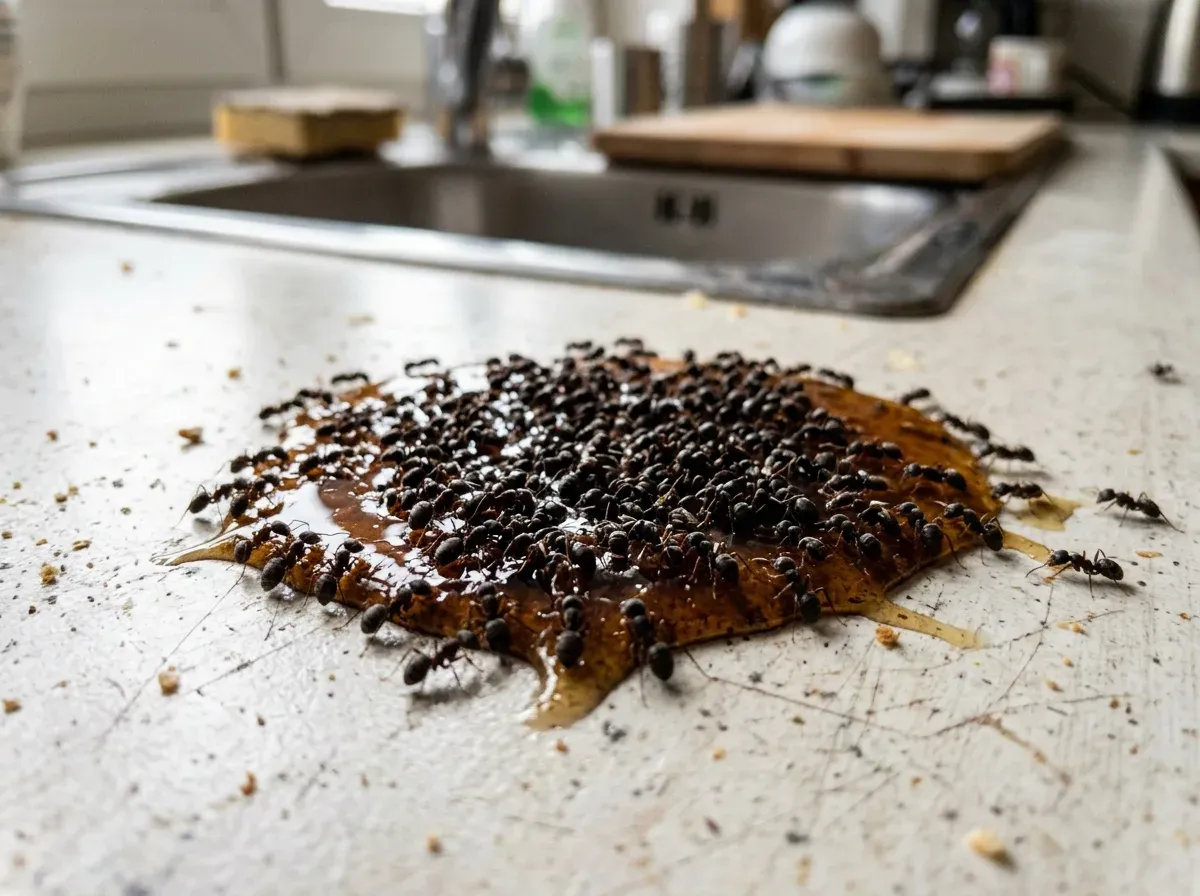
Garden species (typically Lasius niger) – an outdoor nest, mostly under paving joints or in the ground. Individuals appearing indoors are foraging for food; the effective response is targeted treatment of the nest and closing off the entry route.
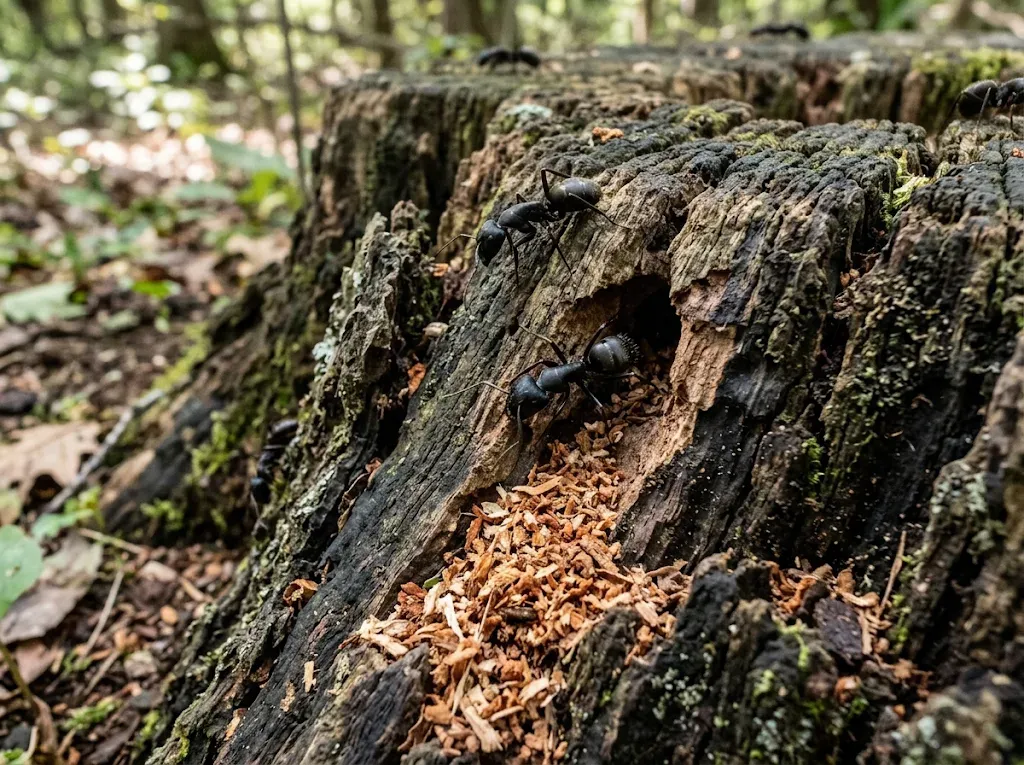
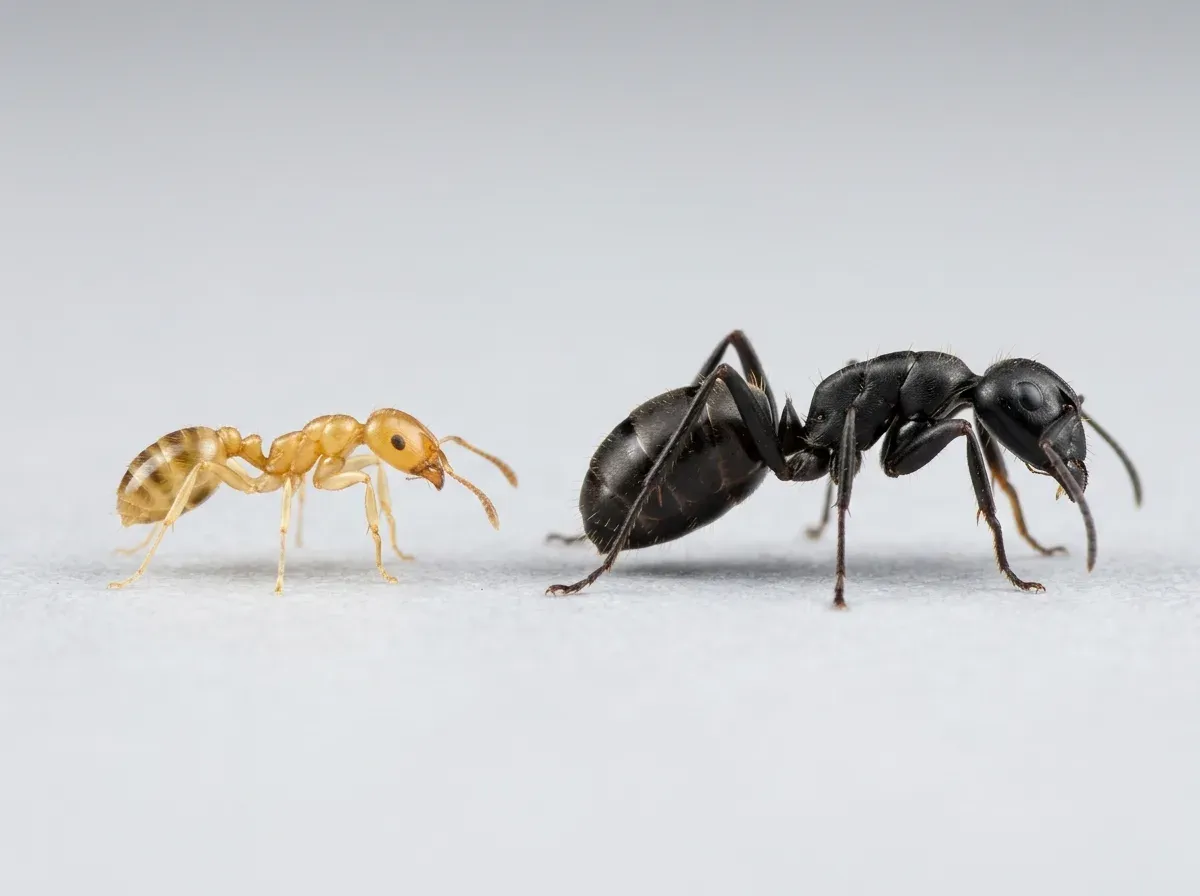
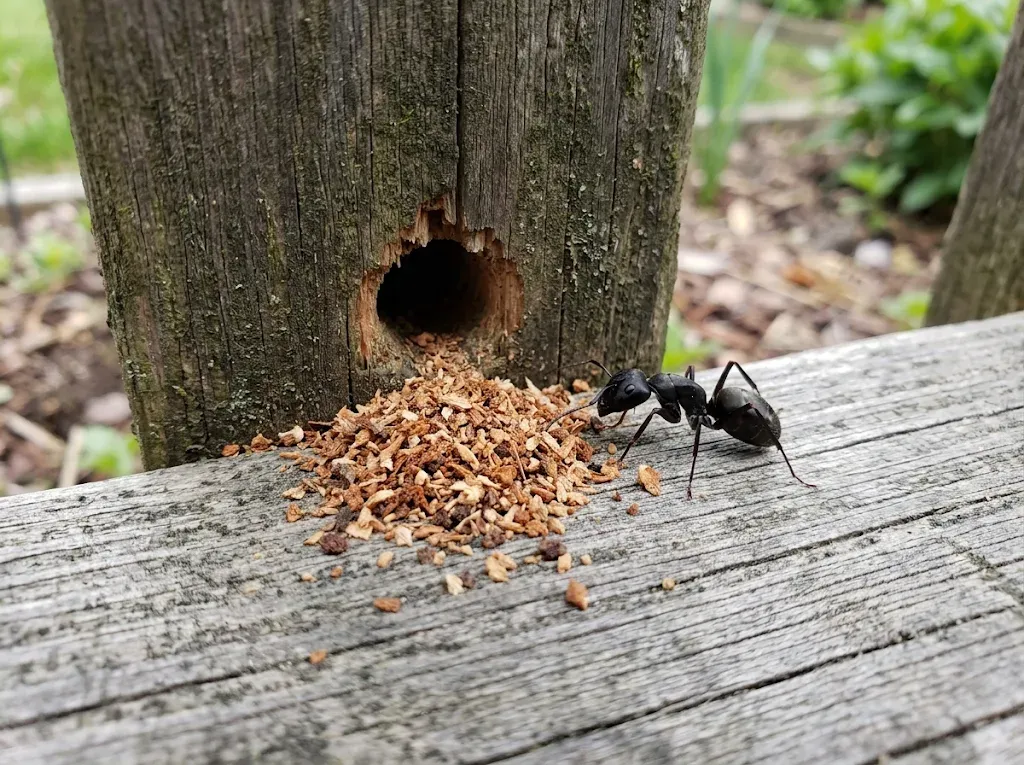
Carpenter ant (Camponotus species) – the largest of the native ants: workers are 6–14 mm long, black or black-and-red. It builds its nest in timber – a rotting stump, garden timber structure, fence post, or a damp roof beam – and pushes sawdust-like shavings out of the galleries it chews. It doesn’t eat the wood, it lives in it. The damage is still real, though: the galleries reduce the load-bearing capacity of damp timber. The task against it is finding the nest; treating the ants on the move does not achieve the goal on its own.
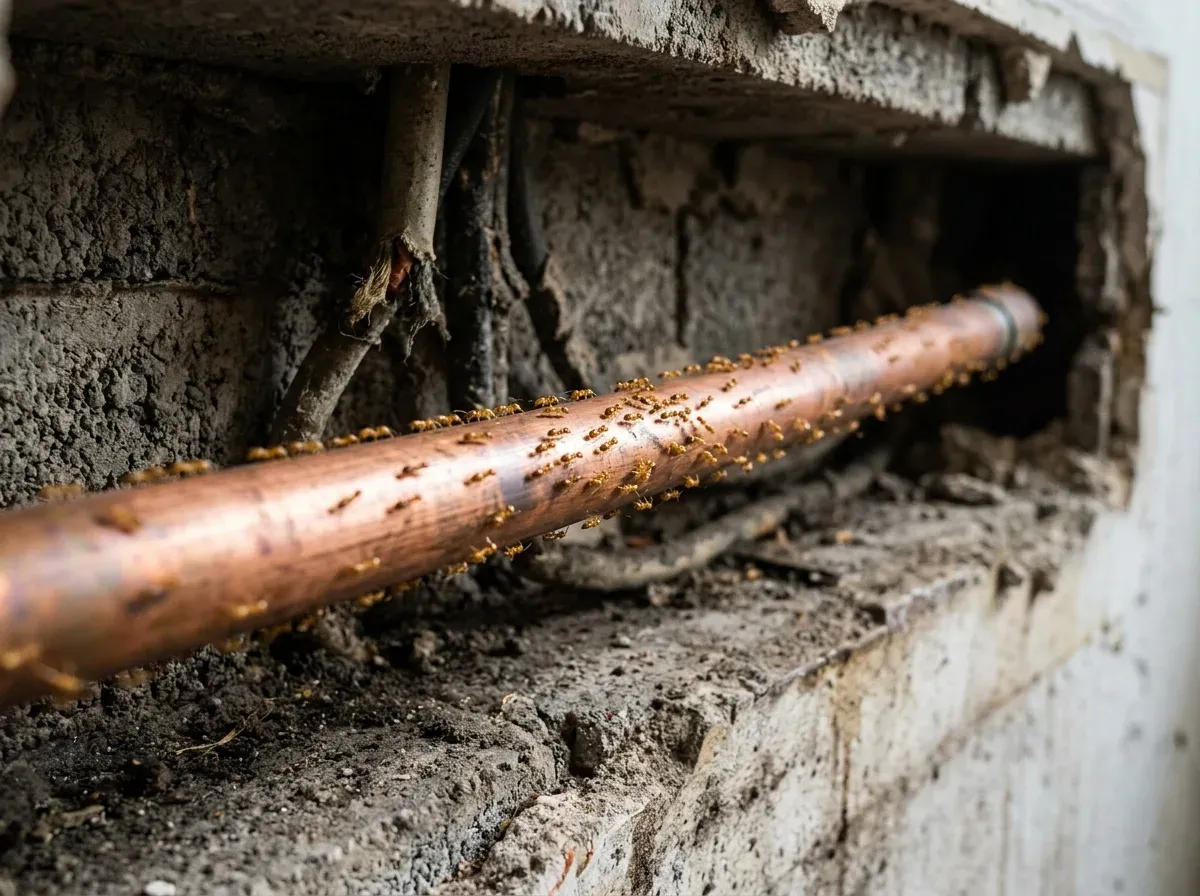
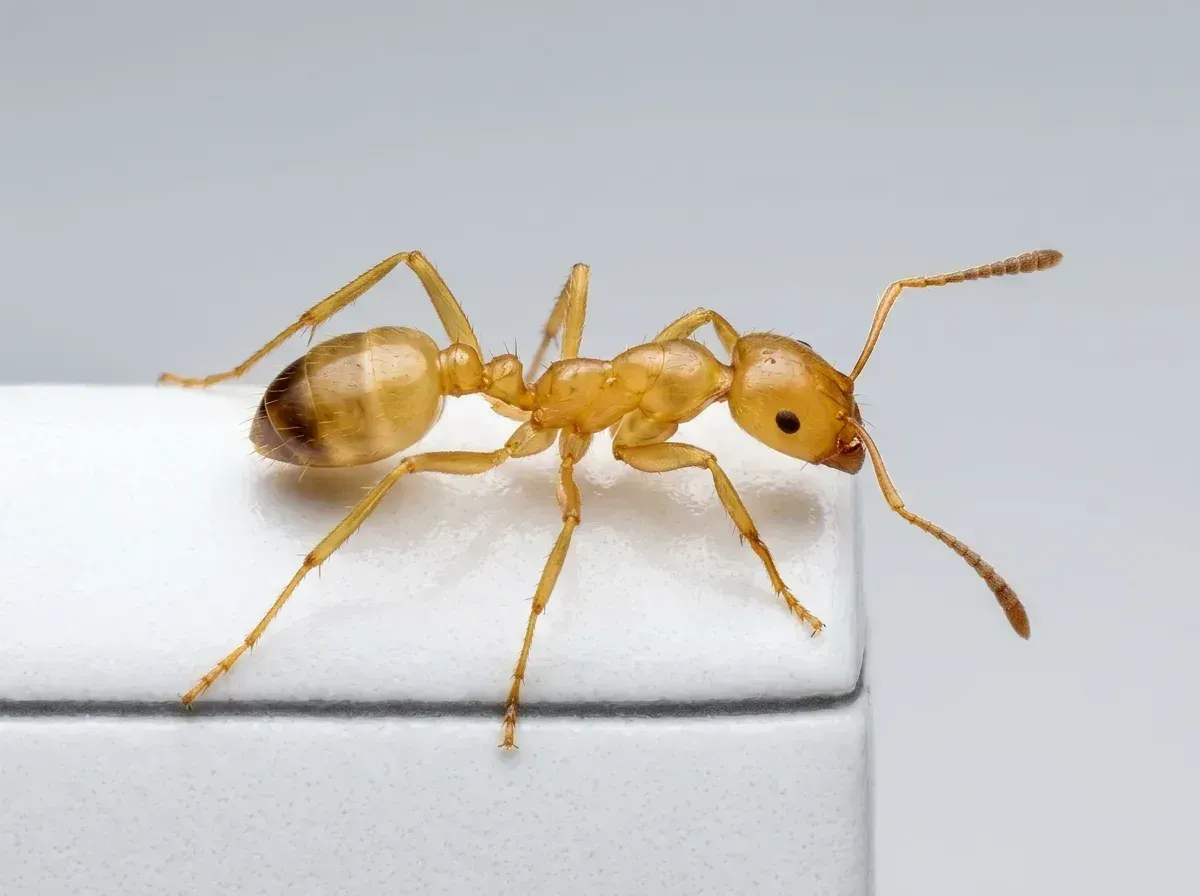
Pharaoh ant (Monomorium pharaonis) – a tiny, yellowish, tropical species that survives here only in heated buildings: hospitals, commercial kitchens, food plants, hotels. Two traits make it a difficult case. It survives even in sterile environments, and surface insecticide makes it scatter – the colony splits into multiple independent nests, so a poorly chosen intervention doesn’t eliminate the problem, it spreads it.
Only a baiting method can therefore be used against the Pharaoh ant, applied patiently and across the whole affected part of the building.
How to recognise it
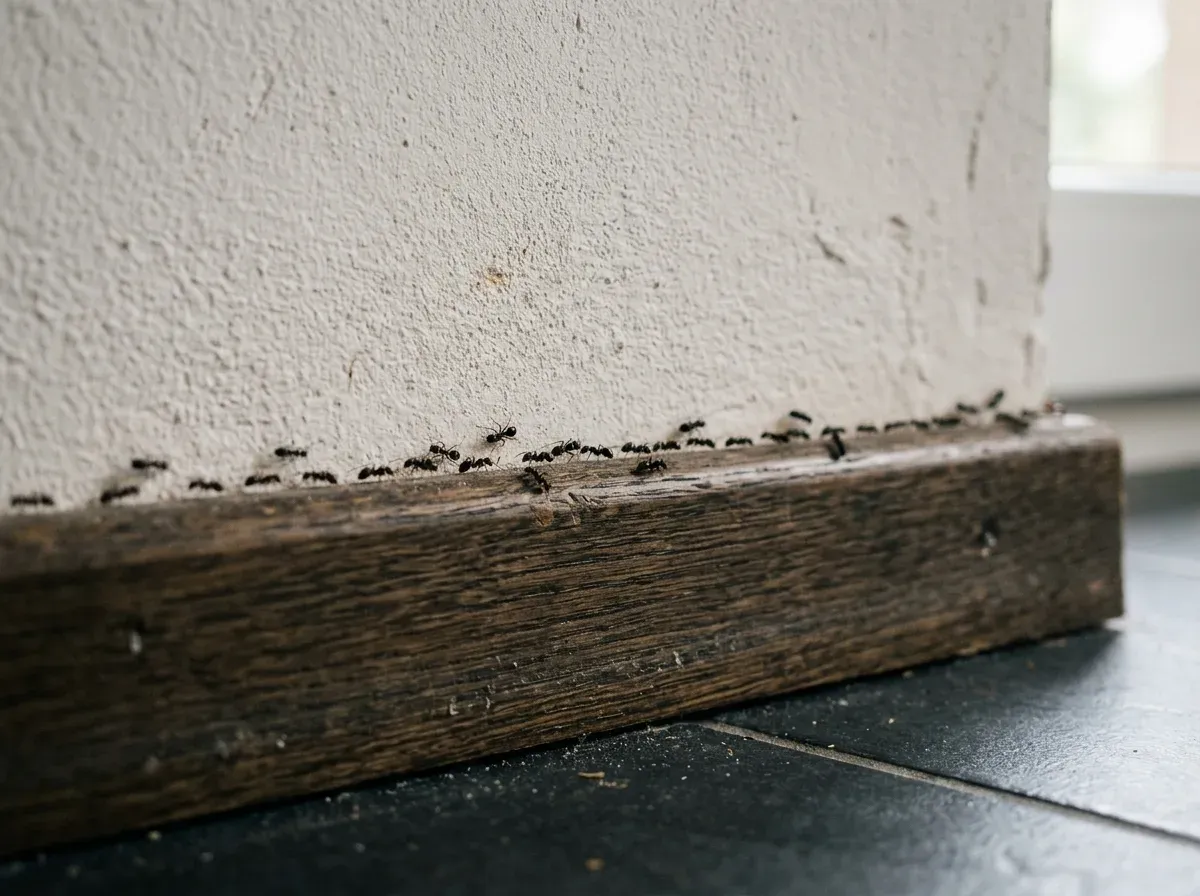
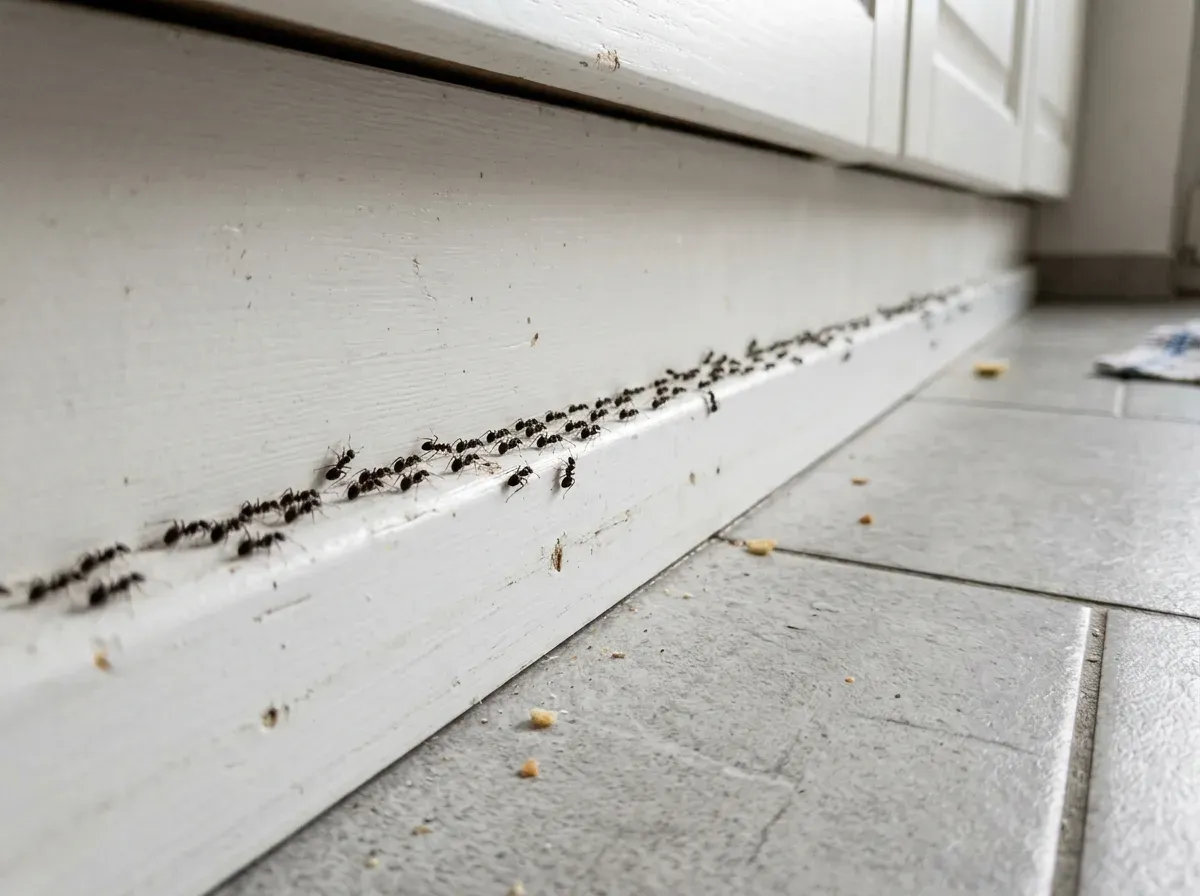
- Trail – ants travel along a fixed route, typically along a wall, skirting board or the edge of paving. Following the trail back leads to the nest.
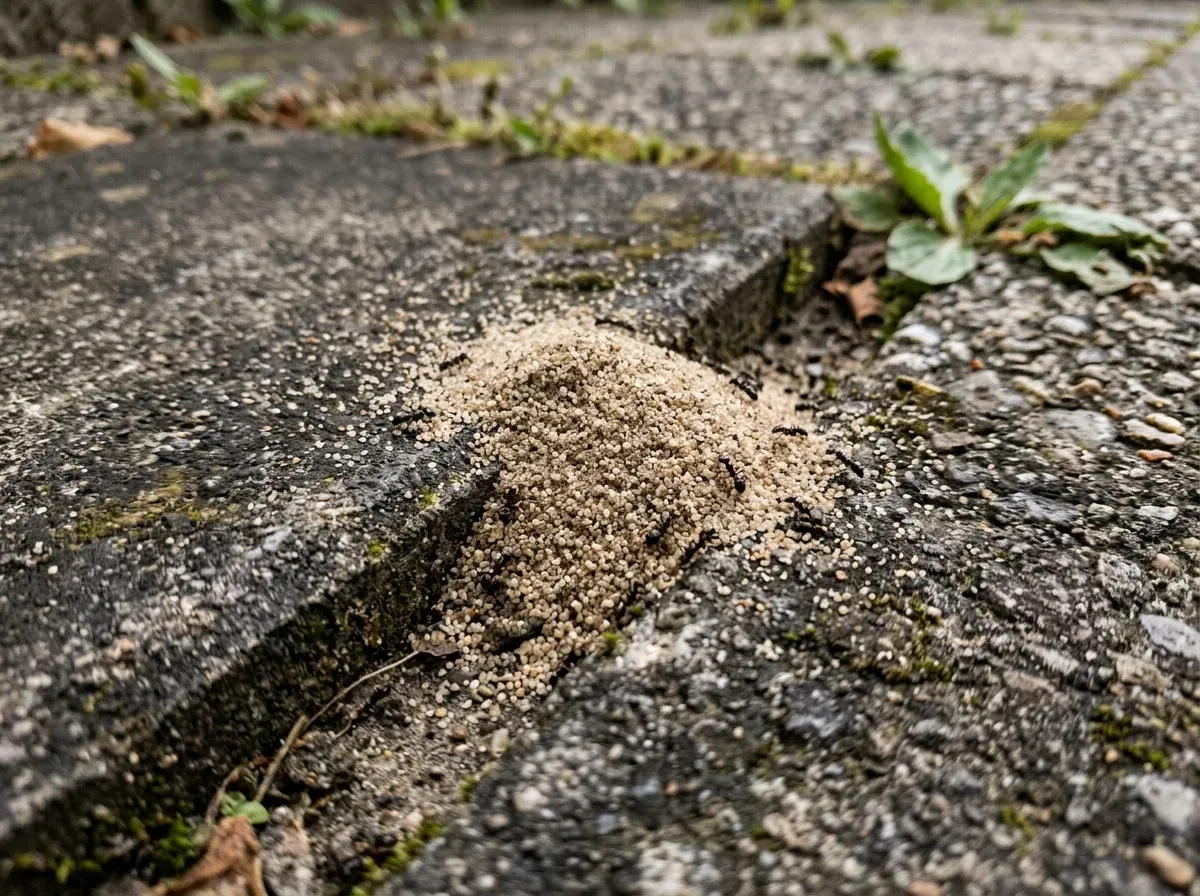
- Sand piles – fine, granular material excavated from paving joints indicates a nest under the paving.
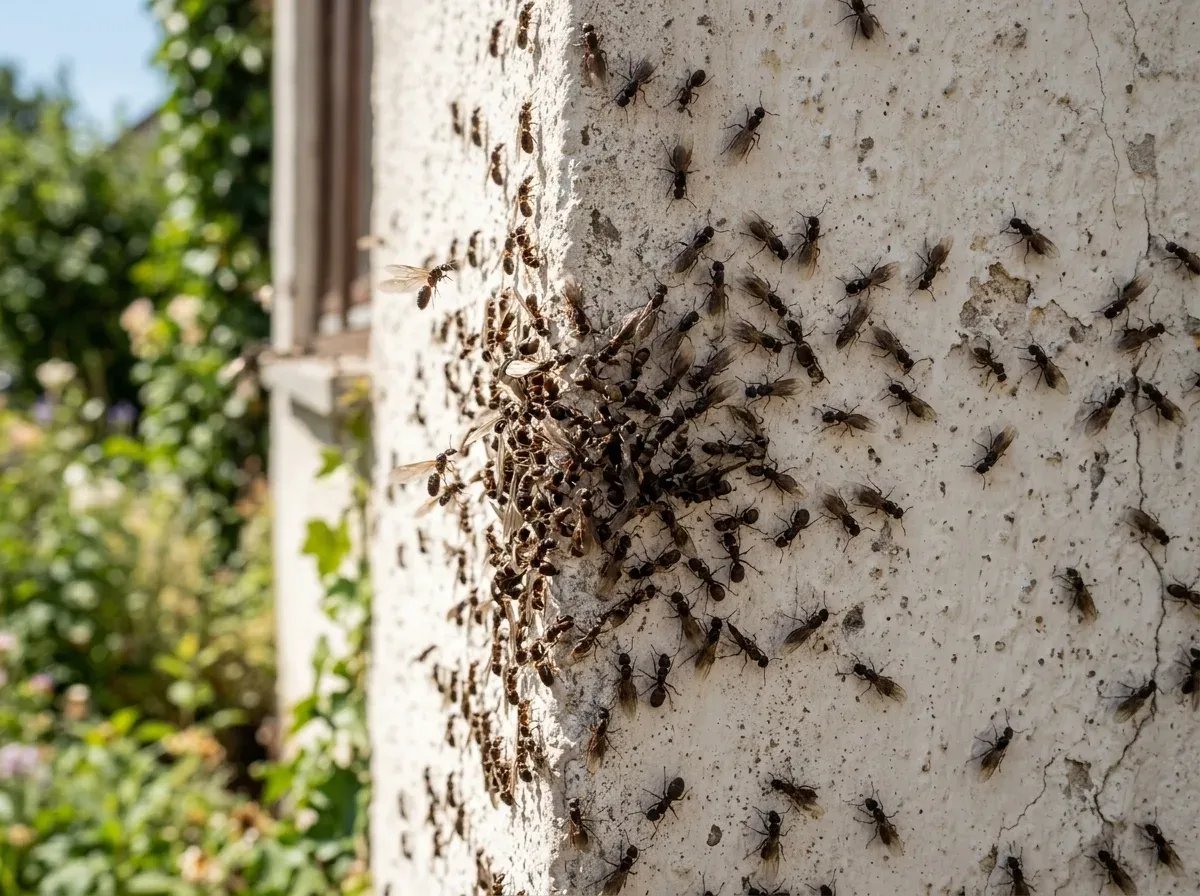
- Swarming – a mass appearance of winged individuals, typically in summer. This is a sign of the breeding season, not of a different species.
- Sawdust-like shavings – dry, coarse shavings accumulating at the base of a stump, under a beam, or next to a fence post. The carpenter ant pushes these out while building its nest, so the nest is directly above or behind the pile.
In food-industry and healthcare settings
Here, ants are not an aesthetic issue. In a food plant they contaminate product; in a healthcare institution, the Pharaoh ant also gets into bandages and sterile materials, which is an infection-transmission risk.
ARZÉN Kft. works in both settings alongside continuous operation, using products approved for the given zone, and issues a treatment report for the intervention.