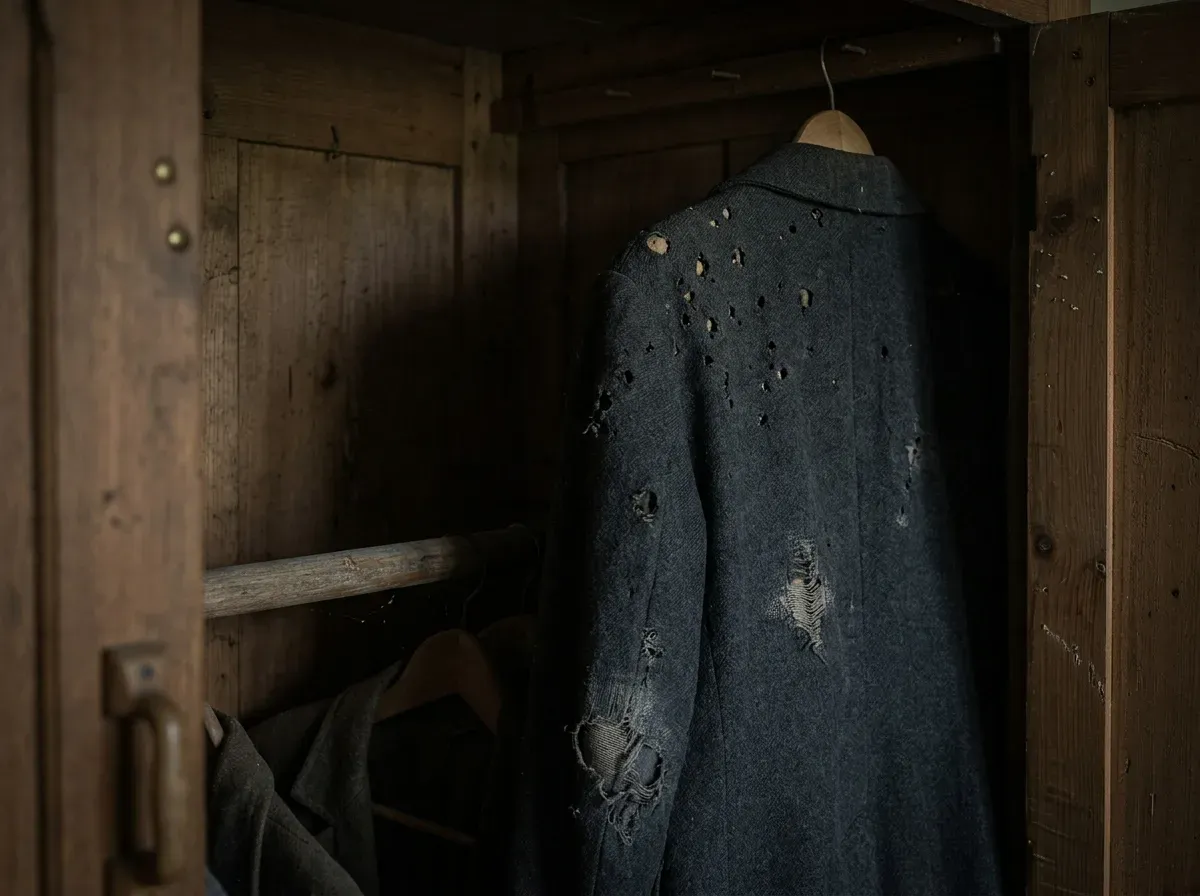
What causes the damage, and what it eats
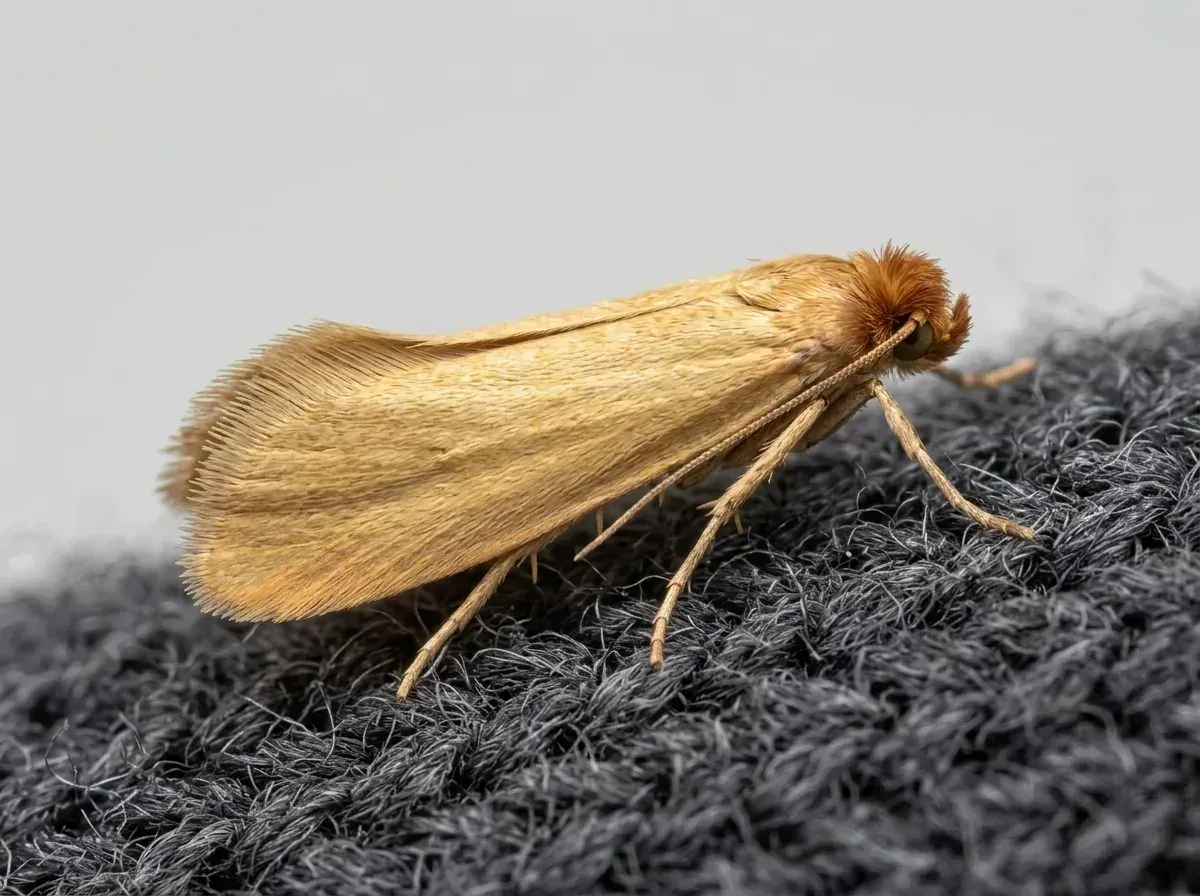
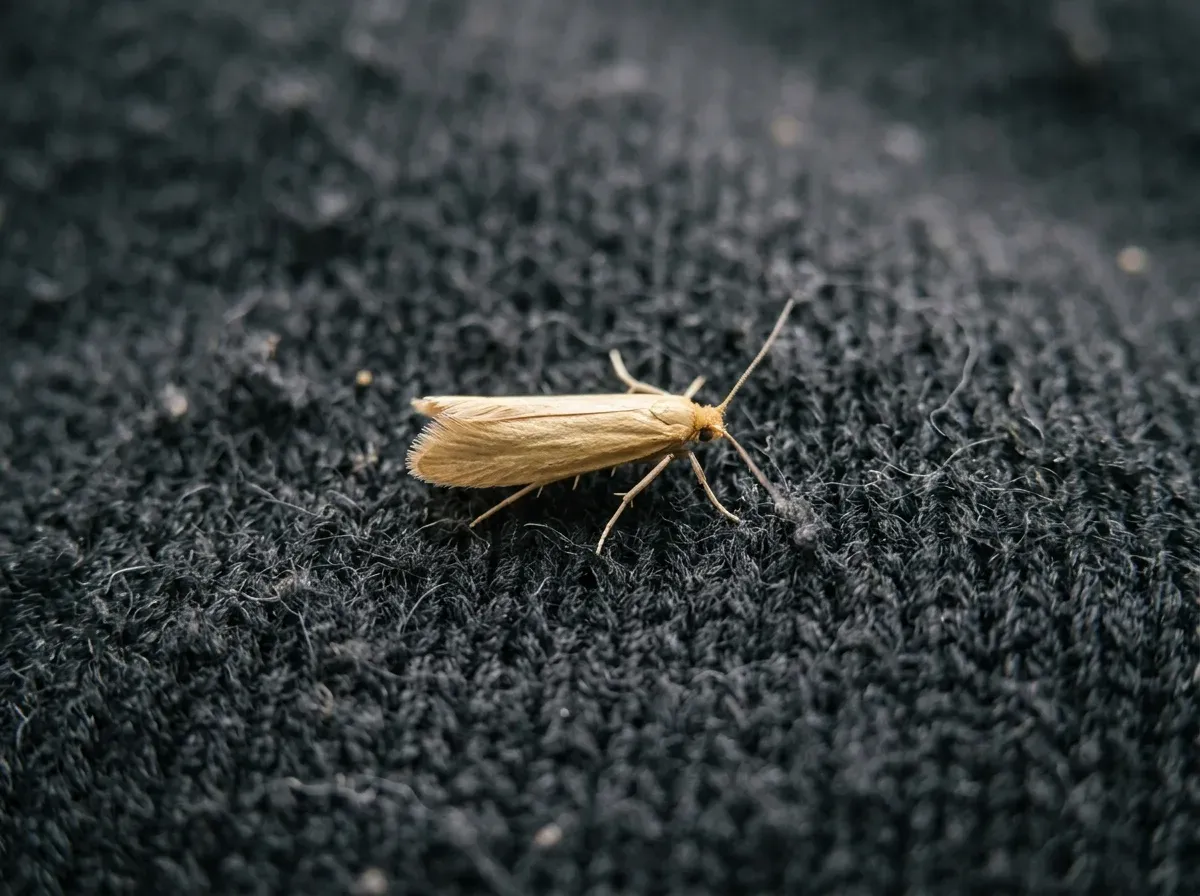
The most important thing to know about the clothes moth is that the damage is caused by the larva, not the flying moth. The adult doesn’t even feed: its role is reproduction. If you see a moth around the wardrobe, that isn’t the pest itself – it’s a sign that the cycle is already under way.
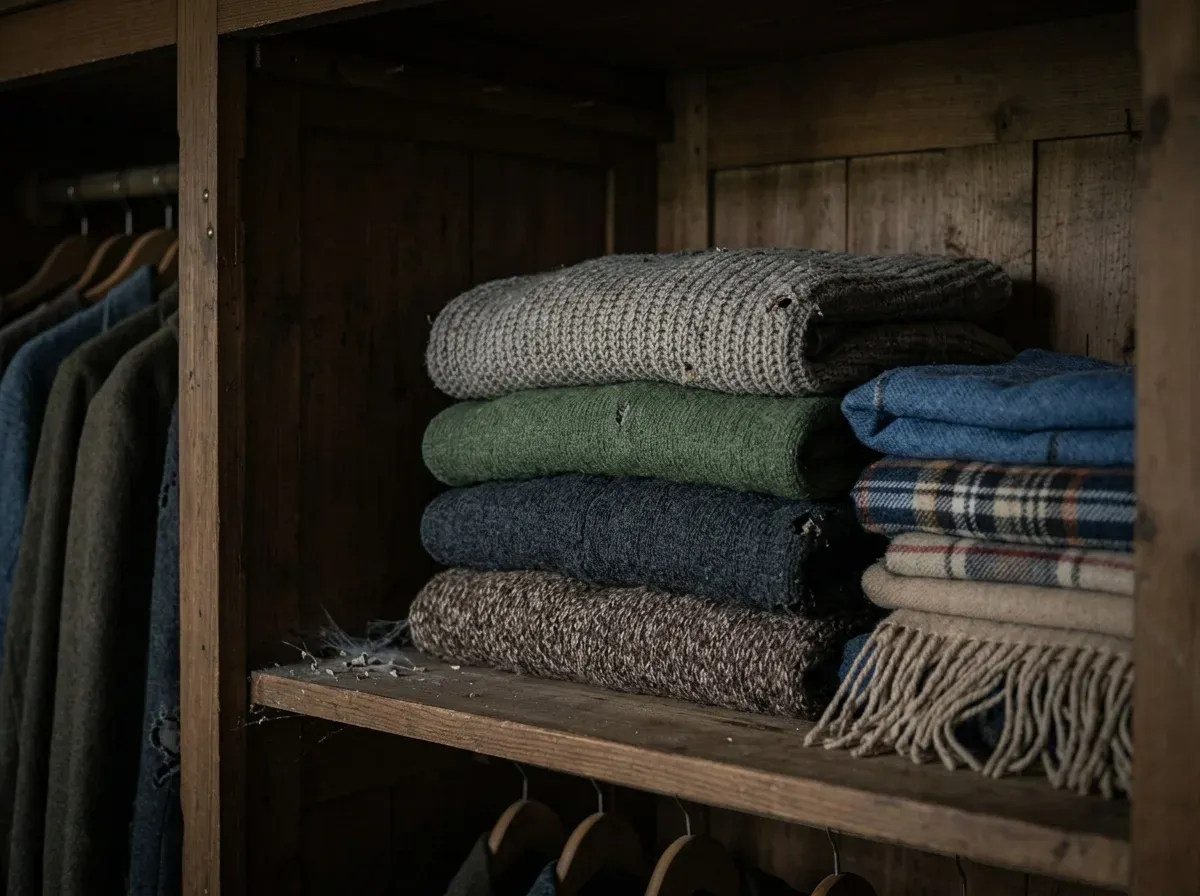
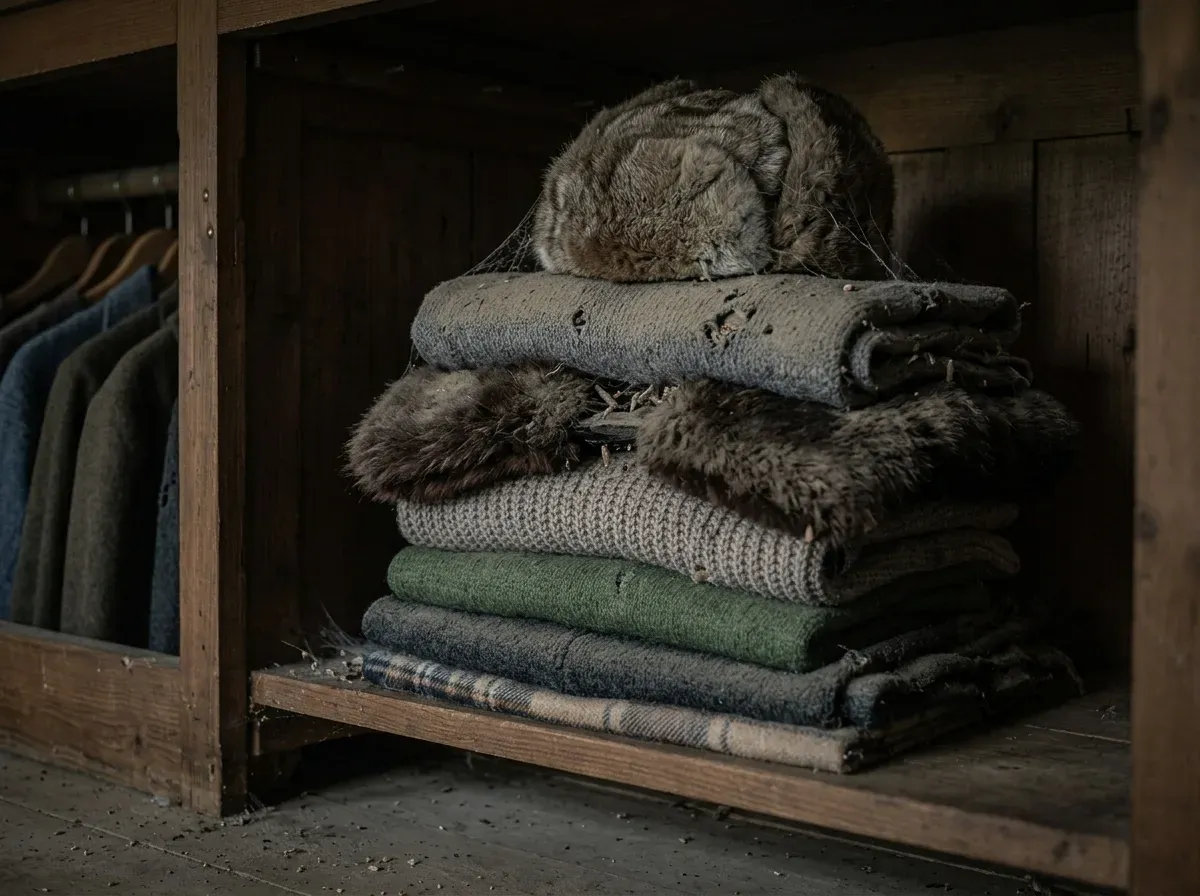
The larva feeds on keratin, so it seeks out animal-origin fibre: wool, cashmere, silk, fur, feathers, wool carpet. Pure cotton and synthetic material are not food – these are typically only damaged if sweat or food residue clings to them. This is why items put away unwashed are damaged more often.
How to recognise it
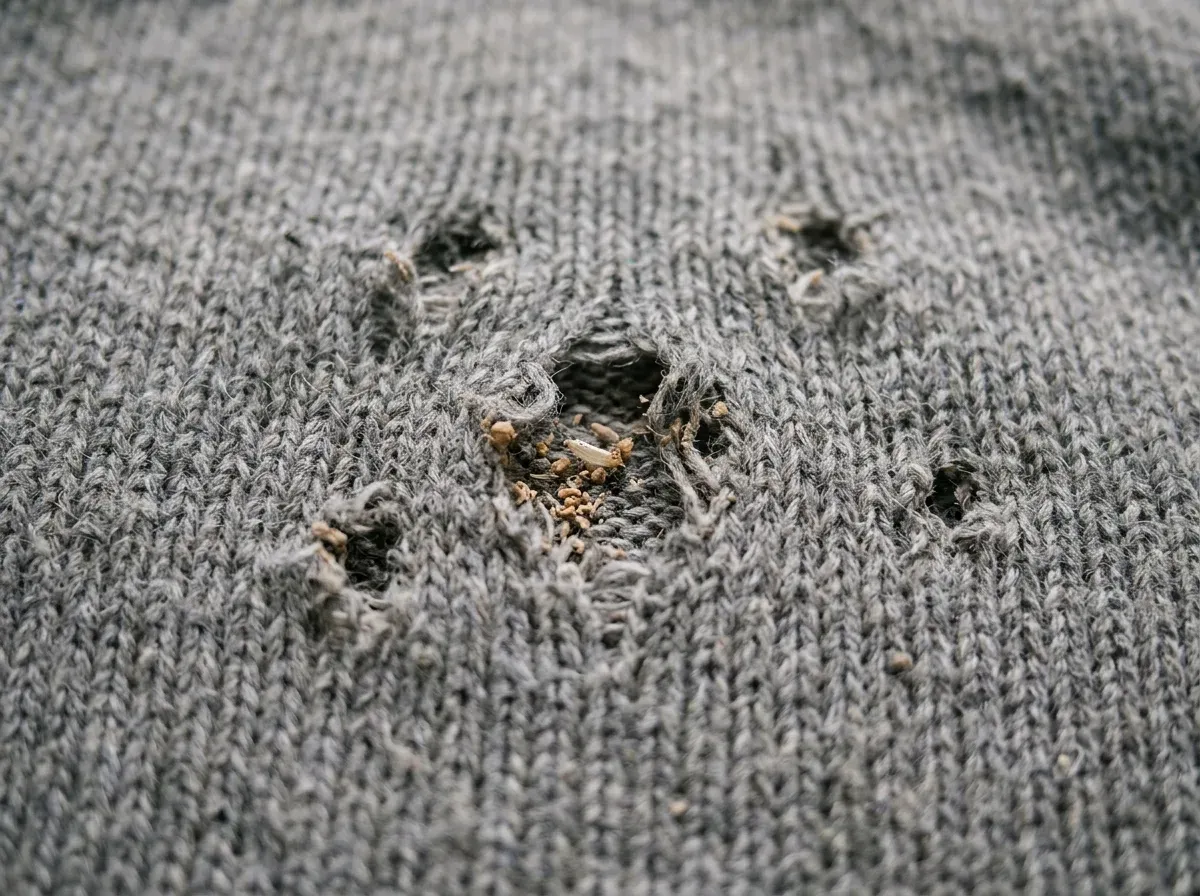
- Irregular holes and gnaw marks on wool or cashmere, often along folds and on rarely moved items.
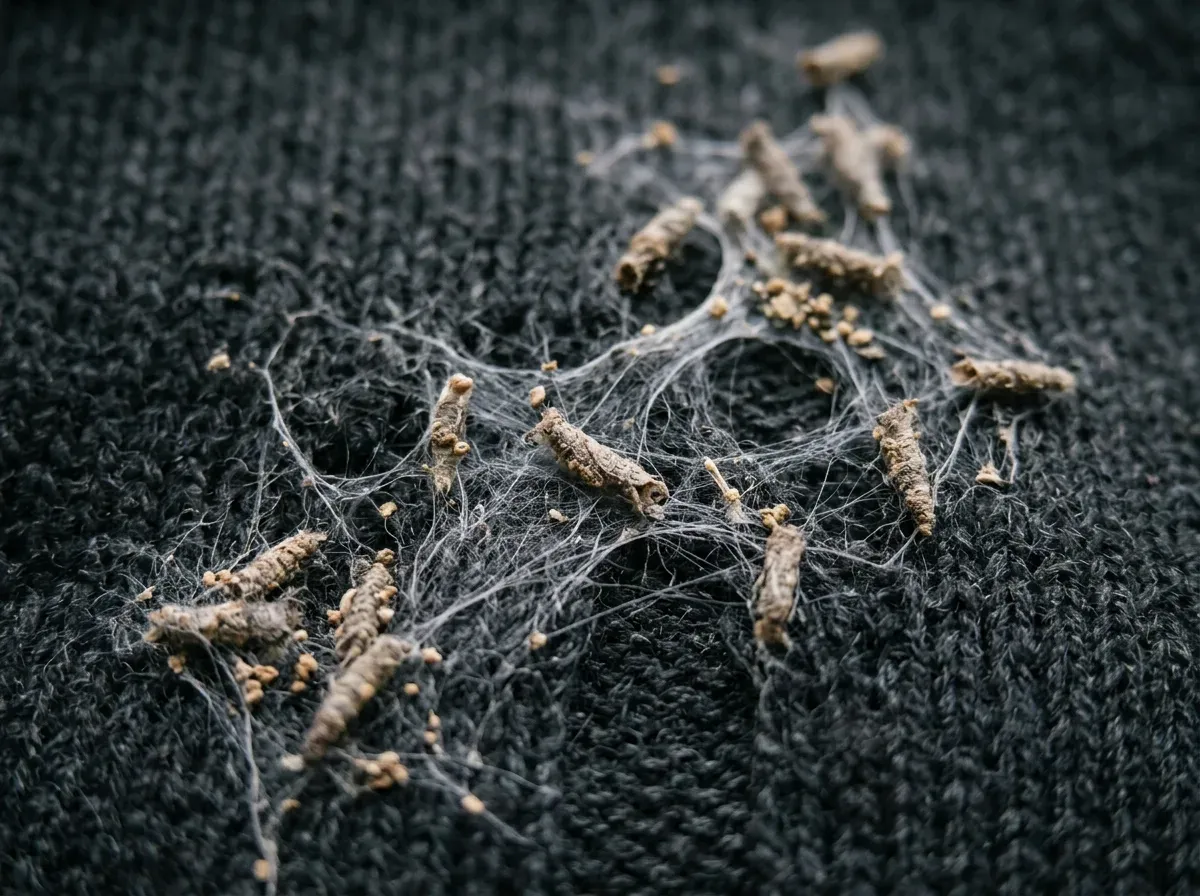
- Whitish, silky webbing, or, in the case of the fur moth, the small case the larva carries with it on the textile surface.
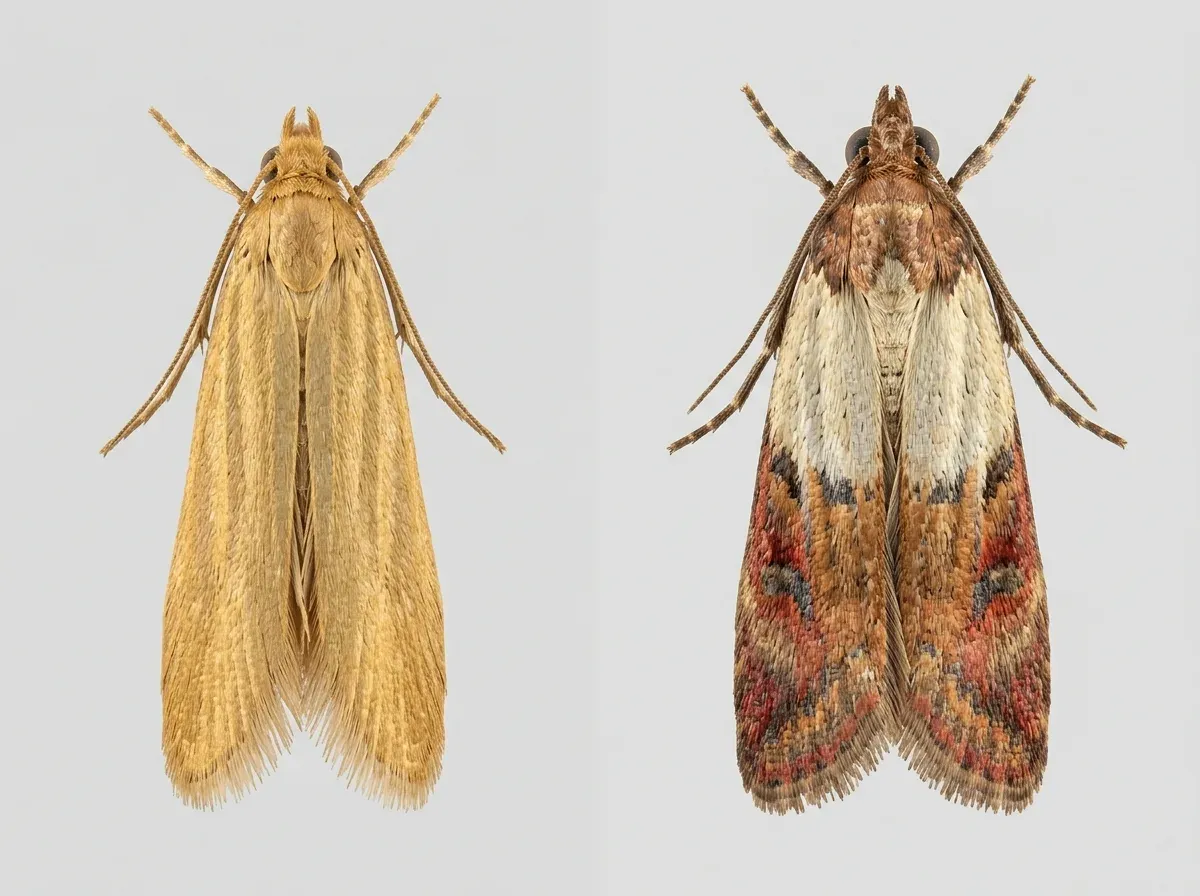
- A small, light-brown moth, which scurries across a surface rather than flying, and avoids light.
Damage typically starts in the dark, back, rarely disturbed part of the wardrobe – where winter items sit motionless for months.
Why a scented sachet isn’t enough
Lavender and similar products at most keep the adult moth away. They have no effect on eggs and larvae already present in the textile, and those are what cause the damage. This is why holes can keep appearing even with a scented sachet in the wardrobe.
What leads to a lasting result
Here too the order matters, and it cannot be reversed:
- Identifying and treating infested items – washing and drying at a high temperature, or freezing, kills both the eggs and the larvae.
- Fully emptying and thoroughly cleaning the wardrobe, paying particular attention to gaps, corners and the underside of shelves, where eggs hide.
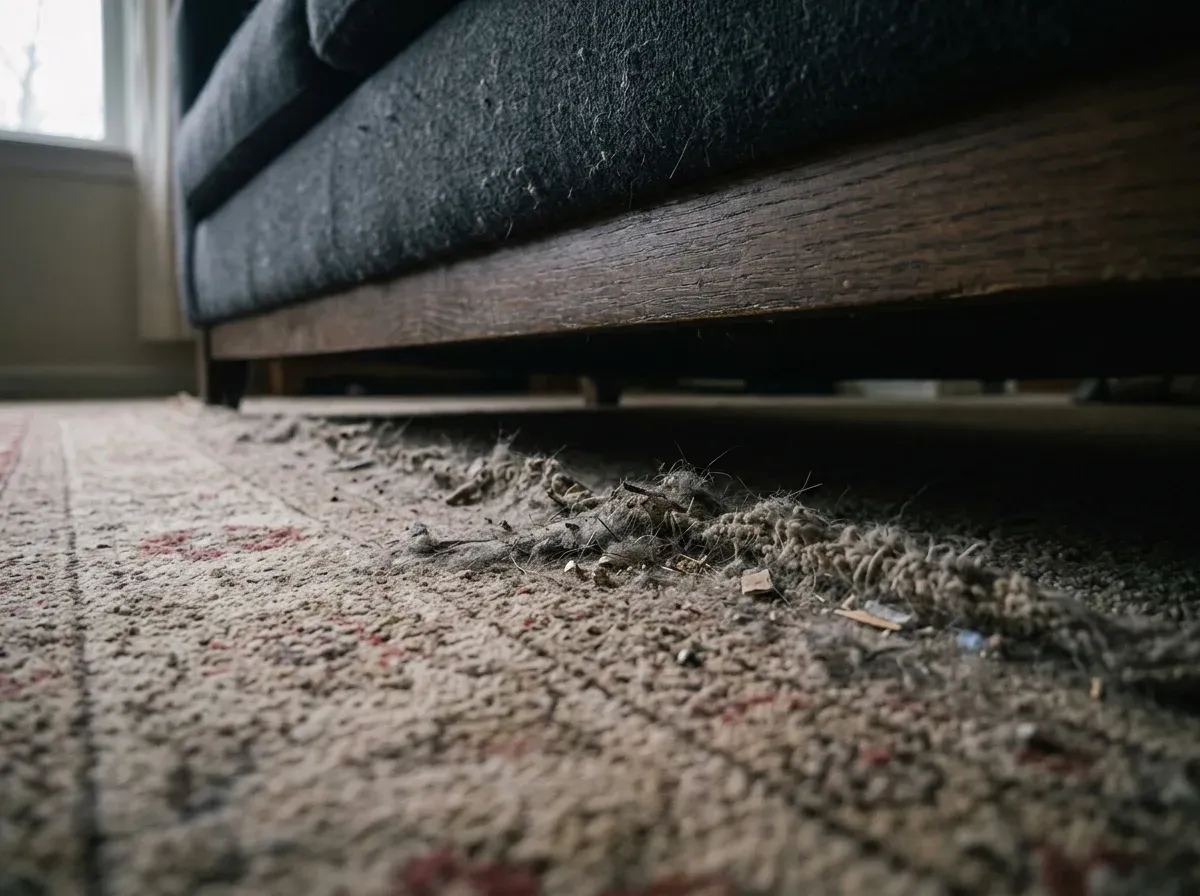
- Eliminating hidden hotspots: under wool carpets, upholstered furniture, rarely used textiles, stored fur.
- After this, if the infestation is extensive, targeted treatment.
If moths appear in stored food rather than in textiles, it isn’t the clothes moth – stored-product pests belong to a different group and require a different method.